
Finney County Arrest Records and Charges
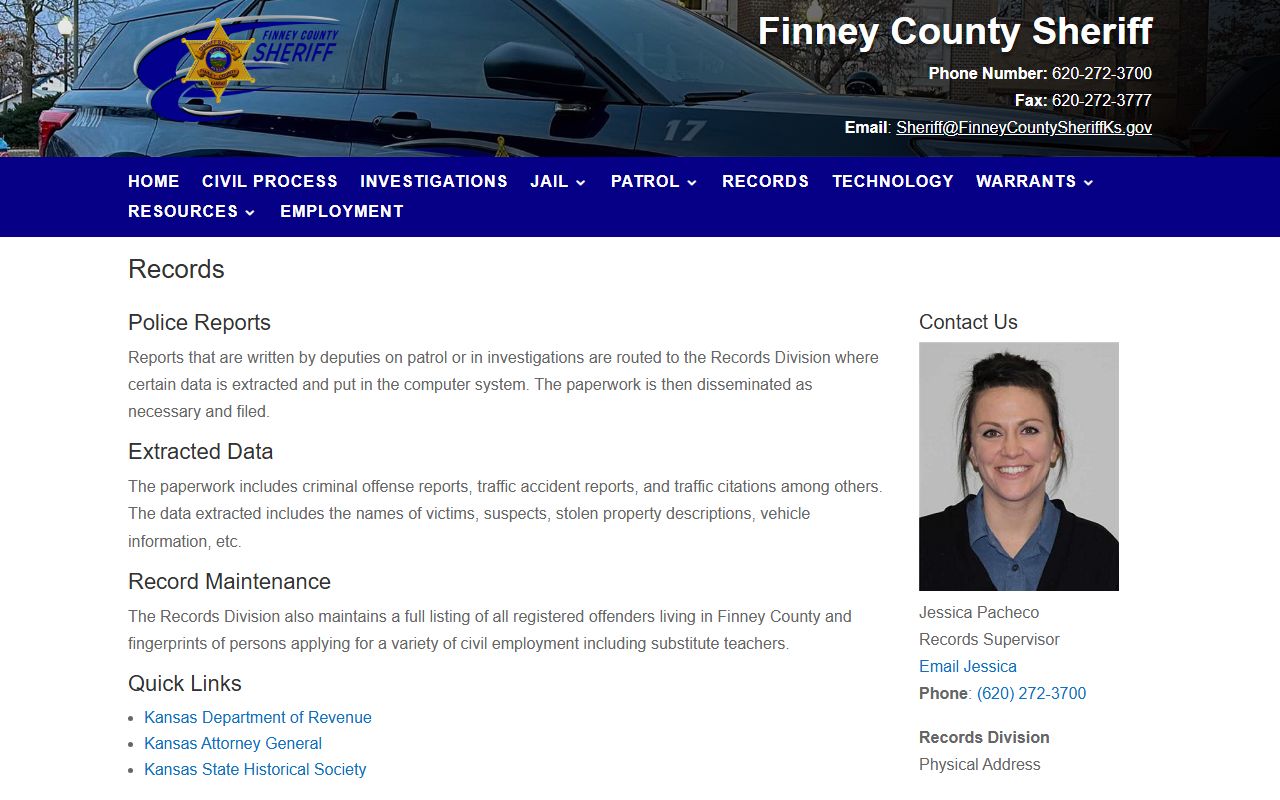
Finney County arrest records begin on the sheriff or police side of the process. A booking entry can show a person's name, booking number, arresting agency, booking date and time, charges as listed at intake, bond, age, sex, and race. The Finney County Sheriff Records Division is the local records office for police reports, traffic accident reports, traffic citations, extracted data, filing, and dissemination. The live jail roster is a custody tool, not the full court file.
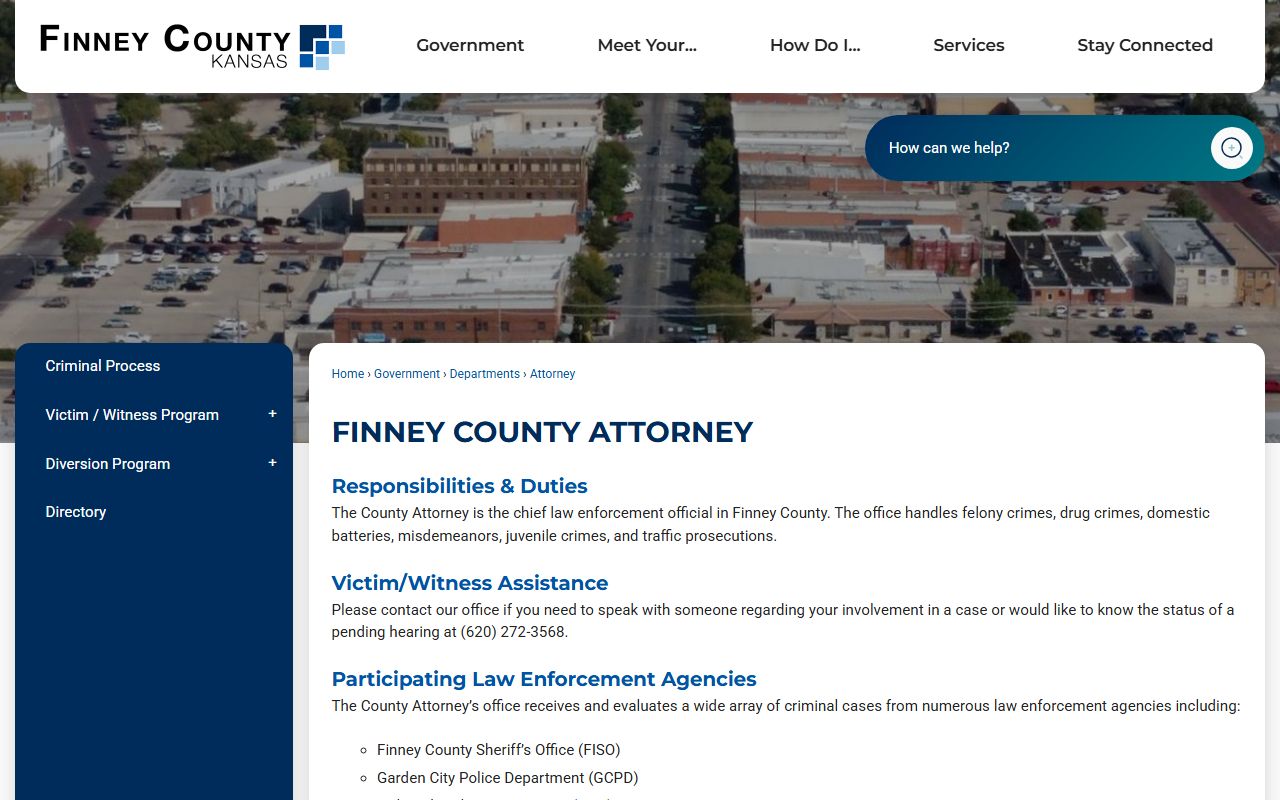
Court charges after arrest start when the Finney County Attorney reviews the agency submission and files a complaint, information, citation, or other charging paper. The Attorney's Office handles felony crimes, drug crimes, domestic batteries, misdemeanors, juvenile crimes, and traffic prosecutions. Once filed, the charge record is tracked through the Clerk of the District Court and Kansas court systems. For booking and custody detail, use the Finney County jail roster in the inmate records section. For pleas, trial events, sentencing, and final outcome, use the full criminal court records file.
The Sheriff Records Division page is the source for Finney County arrest report routing and extracted record services.
Find Finney County Arrest Records
Use more than one access channel because each office holds a different part of the arrest-to-charge path. The sheriff can show booking and report information. The jail roster can show current custody and intake charges. Kansas Case Search can show filed district court cases. Garden City Municipal Court can hold city bench-warrant and ordinance matters that do not start as a District Court case.
- Search the sheriff jail roster for booking data if the person may be in custody.
- Check Kansas Case Search for a District Court criminal, traffic, juvenile offender, or probation case.
- Contact the Clerk of the District Court at 620-271-6120 if the public portal does not show the filed charge.
- Contact the Sheriff Records Division at 620-272-3700 for arrest reports, traffic accident reports, and extracted records.
- For city tickets or missed city court, contact Garden City Municipal Court at 620-276-1150.
The Finney County Attorney directory lists criminal, traffic, and juvenile division contacts. That directory is useful when a booking charge has been sent for review but the public court case data is not clear yet.
Finney County Court Charges Filed
A booking label is an allegation recorded at intake. A filed charge is a court allegation placed in a case by the prosecutor or through a citation process. The County Attorney page says law enforcement agencies that submit cases include the Finney County Sheriff's Office, Garden City Police Department, Holcomb Police Department, Kansas Highway Patrol, KBI, DEA, ATF, immigration services, and the Department of Children and Families.
| Charging Paper | Who Uses It | What It Does | Where to Check |
|---|---|---|---|
| Complaint | Prosecutor or law enforcement process | Starts many criminal cases with formal charge language. | District Court case record or clerk request. |
| Information | County Attorney | States formal criminal charges after prosecutor review. | Kansas Case Search, Public Access Portal, or clerk counter. |
| Citation | Officer or agency | Starts traffic, ordinance, or payable case workflow. | Kansas courts payment route or Garden City Municipal Court. |
The Finney County Attorney page identifies Susan Richmeier as County Attorney and describes the office as the chief law enforcement official for Finney County.
Finney County Charge Status
Charge status can change after filing. A count can be amended, reduced, dismissed, added, or resolved by plea or trial. Finney County court users should read each count on its own because one arrest can produce several separate charges, and each charge can have a different bond, plea, dismissal, or sentence result.
| Status | What It Means | Why It Matters |
|---|---|---|
| Pending | The charge remains open and has not reached final disposition. | Future hearings, plea talks, or trial settings may still exist. |
| Amended or reduced | The charge text, statute, severity, or count may have changed. | The original booking label may not match the filed case now. |
| Dismissed | The court record shows the count or case was dismissed. | Dismissal is not the same as expungement of all agency records. |
| Probation violation | The record concerns alleged breach of supervision terms. | Roster and warrant entries may show this instead of a new offense. |
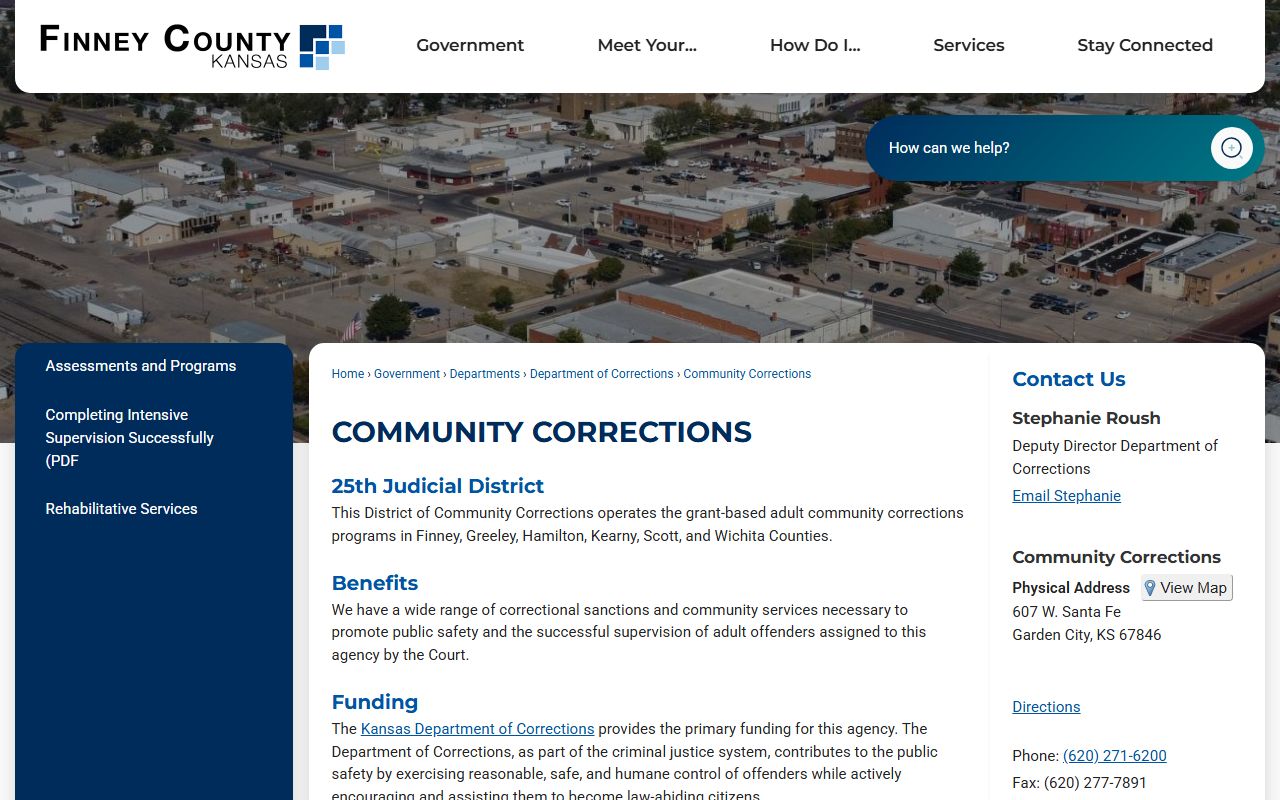
The 25th Judicial District Community Corrections page identifies adult community corrections programs serving Finney, Greeley, Hamilton, Kearny, Scott, and Wichita counties. Supervision records can explain why a new arrest, warrant, or court event appears as a probation or corrections issue rather than a new filed case.
Charge vs Conviction
A charge is an accusation. A conviction is a finding of guilt by plea or trial. The difference matters in Finney County arrest records because a sheriff roster entry can list charges at booking while the court file later shows dismissal, amendment, diversion, plea, conviction, sentence, or probation. Do not treat a booking charge as a final court outcome.
| Point | Charge | Conviction |
|---|---|---|
| Stage | Filed allegation after arrest or citation. | Final finding of guilt by plea or trial. |
| Record source | Roster, complaint, information, citation, or case events. | Disposition, journal entry, sentencing order, or judgment. |
| Public meaning | Shows what was alleged. | Shows legal outcome for the count. |
| Where to verify | Sheriff, prosecutor, and clerk channels. | District Court case record and certified clerk copies. |
Finney County Defense Channels
The Western Regional Public Defender Office in Garden City is the state public defense office for the area. Its published address is 113 Grant Ave, Garden City, Kansas 67846, with mail to PO Box 1077, Garden City, Kansas 67846, and phone 620-276-8137. The research identifies Lori Jensen as Chief Public Defender and lists attorneys and staff. Court-appointed defense is not automatic, but this office is the local public-defense channel for eligible adult criminal matters.
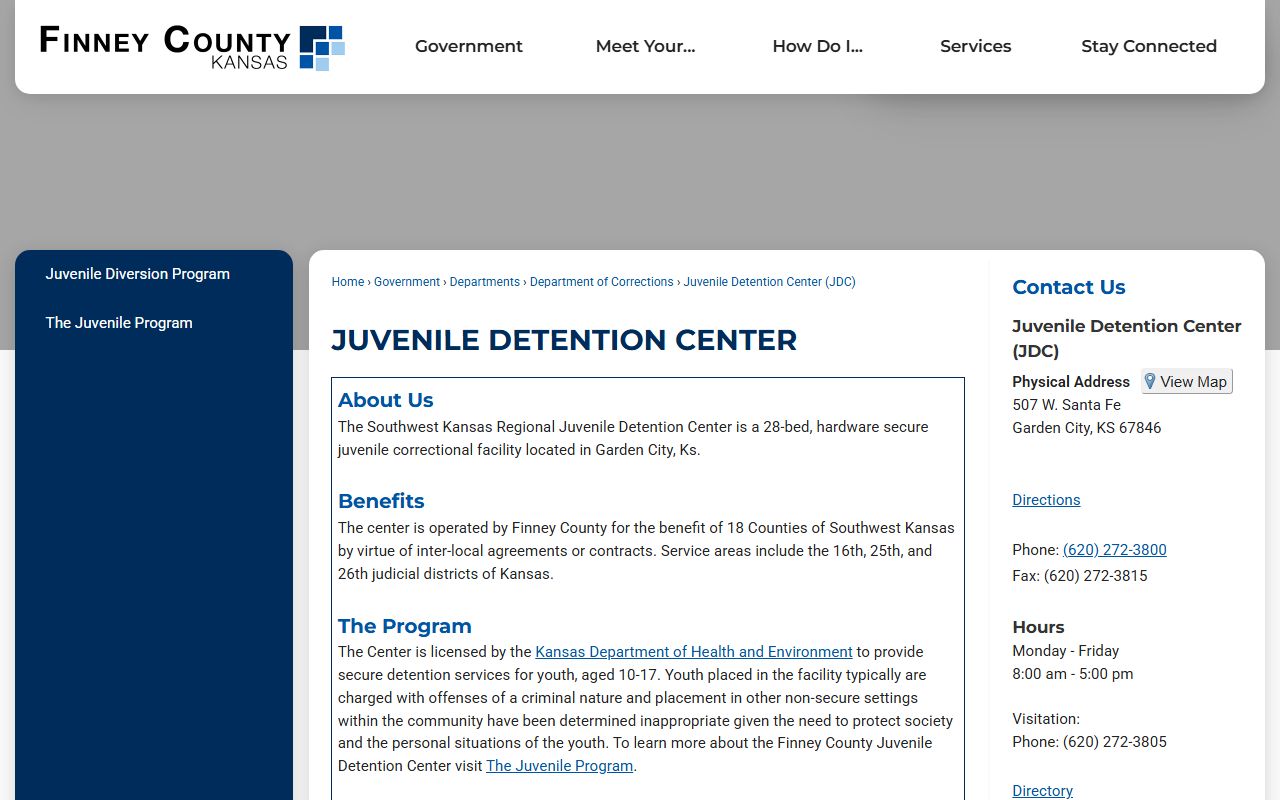
The Southwest Kansas Regional Juvenile Detention Center is a separate 28-bed hardware-secure juvenile facility operated by Finney County for regional districts. Juvenile detention and juvenile court records are not ordinary public arrest records. Kansas juvenile matters have tighter access limits, and K.S.A. 38-2312 provides a juvenile expungement process with notice to the county or district attorney.
The juvenile detention source separates youth custody from adult jail and adult charge-record searches.
Finney County Arrest Record Access
Kansas public access starts with the rule that public records are open unless law says otherwise. K.S.A. 45-216 states that policy. For court records, Kansas Supreme Court Rule 22 and Rule 106B govern public electronic district court access and confidentiality. Sheriff records, court records, and prosecutor files do not all open through the same door.
Statewide offender tools answer a different question than Finney County arrest records. KASPER is for sentenced Kansas Department of Corrections custody, parole, postrelease, and supervision records. The Kansas Bureau of Investigation registered offender search is a registration system, not a complete arrest or charge-history search. Use those state tools only when the research question involves prison supervision or registered-offender status.
Restricted records include juvenile matters, sealed files, expunged cases, protected identifiers, victim identifying information, and some domestic or child-related records. K.S.A. 22-4909 also shows how Kansas separates public offender information from restricted fields such as victim identity, Social Security numbers, non-conviction arrest history, travel or immigration document numbers, and internet identifiers.
Important: A dismissed charge can remain visible in agency or court records unless a valid expungement order applies.